Code: Rare Silver Duplex Escapement English Hallmark 182
Dimensions:
Rare Silver Duplex Escapement English Hallmark 1828
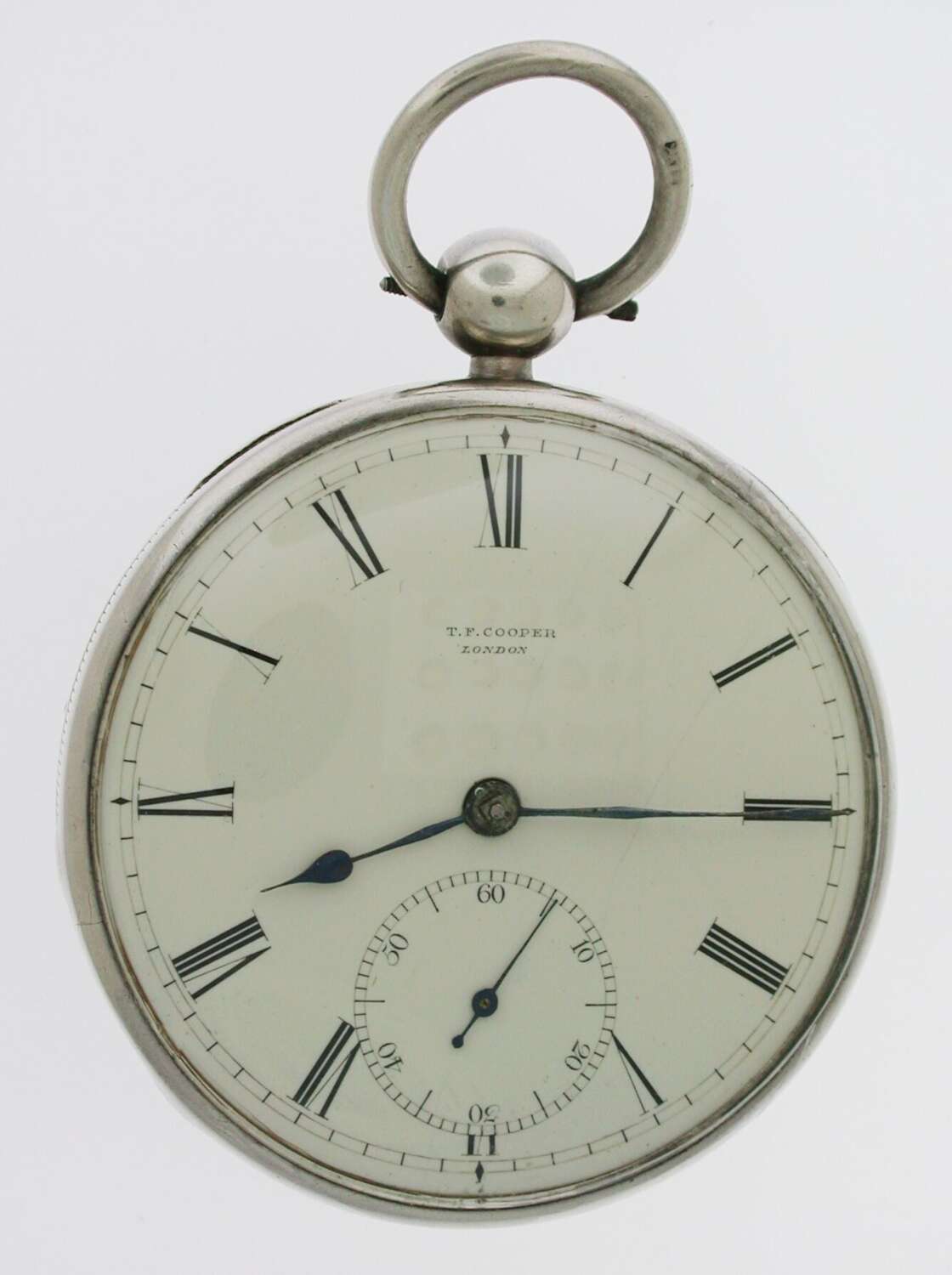
An exclusive 1828 English Silver pocket watch, combining elegant simplicity with quality craftsmanship, featuring a duplex escapement movement and a restrained silver case.
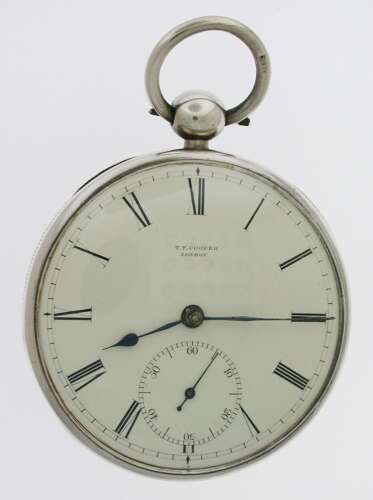
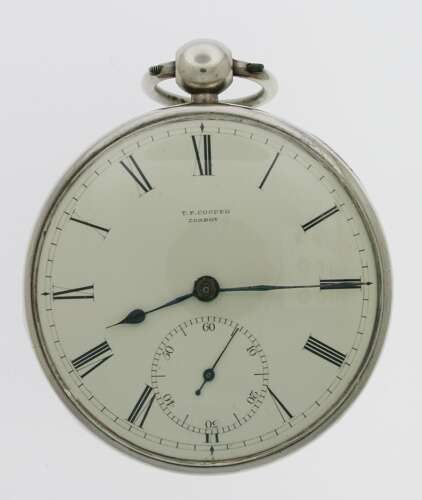
Dial: White enamel dial with Roman numerals, blued steel hands, and subsidiary seconds at six, clean and in working order. The dial is signed T.F Cooper London and is protected by an original bevelled glass.
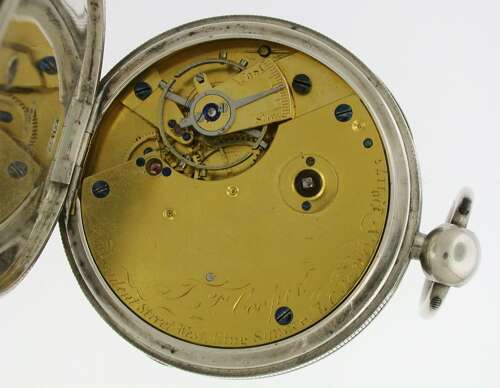
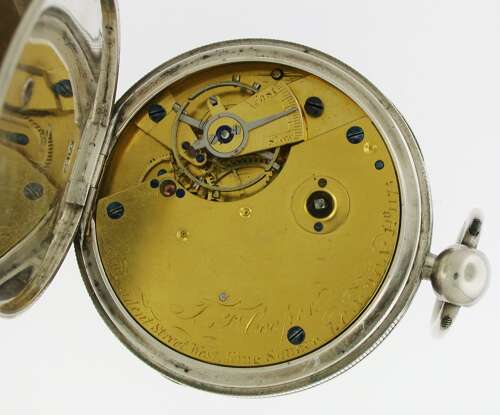
Movement: Key wind Gilt ¾ full-plate movement signed T.F Cooper (Thomas Frederick Cooper - See Brian Loomes dictionary page 173) and numbered 1175, with duplex escapement, blued screws, and finely regulated balance assembly, in a good working condition, however we cannot guarantee accuracy due to the age of the piece.
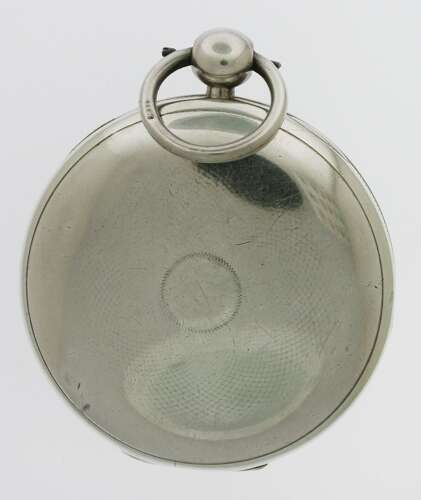
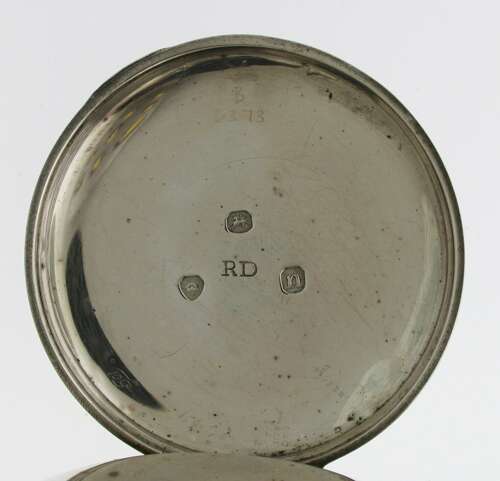
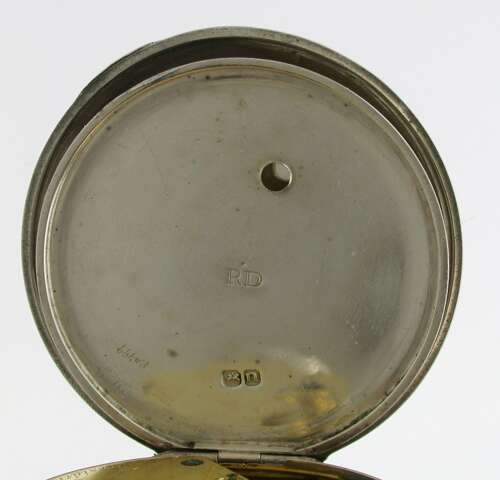
Case: Rubbed Engine-turned silver case with central cartouche, coin edeged and plain polished bow and pendant. The inside of the case is London hallmark 1828.
English Hallmark London 1828 – Diameter: 51mm – Weight: 115.6 gr
History of Duplex: The duplex escapement originated in France around 1724 and is generally attributed to J.B. Dutertre, although Pierre Le Roy is also said to have reinvented or improved it around 1750. In 1782, Thomas Tyrer obtained a patent for it in London. The escapement became popular among English watchmakers from the late eighteenth century until the mid-nineteenth century, before being largely replaced by the detent and lever escapements. It also continued to appear in some machine-made American pocket watches.
Mechanically, the duplex escapement features an escape wheel with two sets of teeth positioned at right angles: one set for locking and the other for impulse. Impulse is delivered in one direction only to a pallet mounted on the balance staff. A slot in the roller on the lower part of the balance staff allows a pointed tooth of the escape wheel to pass and rotate to the next position, where it is locked. An upright tooth then provides impulse to the balance. Some continental versions are of the rest escapement type.
History of Thomas Frederick Cooper: Thomas Frederick Cooper (1789–1863) was a distinguished English watchmaker and chronometer maker based in London during the Victorian era. He became renowned for producing high-quality pocket watches, particularly those fitted with precise duplex and lever escapements. Working from several London workshops, including his well-known address at 6 Calthorpe Street, Gray’s Inn Road, Cooper built a strong reputation among collectors and international buyers, especially in America. His watches were admired for their craftsmanship, accuracy, and fine mechanical finishing. During his lifetime, he was regarded as one of the leading figures in the British watchmaking trade. After his death in 1863, his son continued the family business, preserving the legacy of the Cooper name in horology.
Although Thomas Frederick Cooper is best known for his Victorian-era watches, this pre-Victorian example holds a special place in horological history. Dating from the Georgian period, it represents an earlier chapter of his craftsmanship and makes it a rarer, more intriguing piece for collectors who appreciate exceptional heritage.
Payment can be made through PayPal or Bank Transfer.
As always, all my shipping items are sent out with Royal Mail signed for and registered Post, with tracking available.
As passionate collectors and enthusiasts, we are always looking to purchase pocket watches in any condition, whether working or not, valuing their history, craftsmanship, and the unique story behind every treasured timepiece we acquire.